
Farm Animals Unit Study: A Part of our Pets & Vets Family-Style Homeschool Unit
This installment of our Pets & Vets Family-Style Units is for Homeschooling Families with learners of all ages and abilities.

In this multi-subject unit study about Farm Animals on a typical American farm, your kids will:
- Learn what jobs each farm animal has
- Read cow poetry by R.L. Stevenson
- Sing farm animal songs
- Choose a farm animal to study in-depth
- Make a chicken scratch toy
- Find out the different names for male and female farm animals
- Define new agricultural vocabulary words like ruminant and genetic diversity
- Research heritage vs. hybrid breeds
- Write a research paper on a animal husbandry topic
- Explore the pros and cons of raising pigs or chickens as a small business
- And much more!
This Charlotte Mason + STEAM family-style Unit Study has 4 main levels of difficulty to help you meet your child at the level they are currently working, instead of some arbitrary grade level.
In general, the 4 levels are split into these corresponding categories:
- Early Learners: Preschool
- Early Elementary: Kindergarten up to 2nd grade
- Upper Elementary: 3rd to 5th grades
- Middle & High School: 6th to 12 grades
Feel free to mix and match with the lessons and activities for the three different levels to find activities that best suit your children and their individual learning styles. I recommend selecting the individual activities that will slightly challenge your child so that they can grow in their abilities and knowledge.

Be sure to check out the rest of our Pets and Vets Units:
- Dogs and Cats
- Small and Exotic Pets
- Veterinarians (coming soon)
Some links in this post may be affiliate links. This means that if you click on them, I may make a tiny commission, at no extra cost to you. For more info, check our privacy policy.
English Language Arts
Read Aloud Living Picture Books
Select a few of these to read to your younger children, toddlers to early elementary.
Richard Scarry’s The Animals of Farmer Jones (Little Golden Board Book)
The Year At Maple Hill Farm by Alice Provenson Also on Open Library (highly recommended for your home library)
Big Red Barn by Margaret Wise Brown Also on Open Library This book is very reminiscent of Goodnight Moon. (highly recommended for your home library)
On the Farm by David Elliot
Old MacDonald Had a Farm A Little Golden Book
Blossom Comes Home by James Herriot (You can also find this book as a part of the larger book, James Herriot’s Treasury for Children. We own this book, which has many of his children’s stories and highly recommend it for your home library. And the story Blossom Comes Home is also in the Animal Stories compilation book listed below in Independent Readers )
Smudge, The Little Lost Lamb by James Herriot (You can also find this book as a part of the larger book, James Herriot’s Treasury for Children. We own this book, which has many of his children’s stories and highly recommend it for your home library.)
Who Took the Farmer’s Hat? by Joan Nodset
Baby Farm Animals (A Little Golden Book) by Garth Williams (he illustrated the Little House books) For your toddlers and preschoolers
The Cow Said Meow by John Himmelman Your toddlers learning which sounds the farm animals make will get a kick out of this funny book. Also on Hoopla.
Three Hens and a Peacock by Lester L. Laminack All farm animals serve a purpose and have a job to do. Until the peacock shows up!
Family Read Aloud
Among the Farmyard People by Clara D. Pierson Also available on Hoopla or Open Library
Independent Readers
In order from beginning reader to high school. Choose a book that your child hasn’t yet read and is closest to their reading abilities.
The Jolly Barnyard (Little Golden Book) by Annie North Bedford
Three Dollar Mule by Robert Clyde Bulla Also on Open Library
Farmer Boy by Laura Ingalls Wilder Also on Hoopla
Charlotte’s Web by E.B. White Also on Open Library
Animal Stories by James Herriot Also on Hoopla
Teens and Adults: The Reluctant Farmer of Whimsey Hill by Bradford M. Smith Also on Open Library or the Audiobook is also on Hoopla OR The Lord God Made Them All (All Creatures Great and Small) by James Herriot I highly recommend that parents preview the Herriot book first to make sure you are okay with your high schooler reading this book. There are some graphic veterinary medicine scenes and a few curse words.
Folktale
The Little Red Hen There are many variations of this folktale. We like the Little Golden book one and Paul Galdone’s retelling. My friend, Cassie at 3 Dinosaurs, has a fun, free printable pack for toddlers and preschoolers to go with this story.
Poetry
The poems in this section are included in both the Sampler and the Unit Study Bundle for your convenience. You can also use them for additional copywork or narration exercises (see the Grammar section below).
Younger Students: Nursery Rhyme: Baa Baa Black Sheep Help your child memorize either the original, or the modern day version.
Elementary Students: Mary Had a Little Lamb by Sarah Josepha Hale. This familiar 3 stanza poem follows a classic ABAB rhyme. Your younger kids may enjoy this video of the poem, Mary had a Little Lamb, in its current song version.
Middle School Students: Have your students read the classic poem, The Cow, by Robert Louis Stevenson, published in 1885 in his book, A Child’s Garden of Verses. Discuss with your child how the author viewed the cow. Did he appreciate the cow, or dislike it?
High School Students: Have your students read the poem, The Goose Explains by Amos Russel Wells (1862-1933). Discuss what things the goose did that are natural behaviors for a goose and how they relate to other jobs on the farm.
Grammar & Copywork
All Levels
Copywork and narration are a real-life way to work on grammar skills. Use the Farm Animals Narration and the Farm Animals Copywork Printables in the Free Resource Library or from the Farm Animals Unit Study Bundle that has three levels of copywork and four levels of narration work.
For the narration pages, select the passage that best matches your child’s writing and spelling abilities. Then, read the passage to your student all the way through first. Then read it again, 2 or 3 words at a time, giving them time to write it down. Tell them to do their best, but not to get “caught up” in making sure it’s all spelled correctly while they are writing. They can go back when they are done to fix any spelling if they want.
When they are done, give them the original page (that you read off of) and let them “check” it and fix any spelling or punctuation mistakes. Talk to them about any spelling or punctuation rules that they used, just to help cement it in their brains. It’s really important for them to check it, not you. It seems to give them ownership of it and makes them remember the corrections.
Then use the Farm Animals Copywork pages both as copywork and handwriting practice.
Phonemic Awareness and Vocabulary
Early Learners: Use the Farm Animals Unit Study A to Z Vocabulary Cards from the Free Resource Library for your early learners to work on both vocabulary and phonemic awareness (beginning sounds). There are 26 vocabulary cards so you can select which ones are best for your learner to work on learning.
Your kids working on learning their ABCs will enjoy this Farm Animal ABC song.
Early Elementary: Have your elementary students add -ing to the Elementary Farm Animal Jobs vocabulary words. Some of these words will need the silent e removed, will need the ending consonant to be doubled, or will need the y changed to an i before adding -ing. Review these rules with your kids.
Upper Elementary, Middle School, and High School: Have your students look up the words on the respective Farm Animals Upper Elementary, Middle School, or High School Vocabulary Lists and write out the definition and then use the word or phrase properly in a sentence. (Make sure they know not to just say “I saw a ____” as their sentence 🙂 ).
Spelling
Early Learners and Early Elementary: Use the Preschool and Early Elementary Spelling Cards and letters from the Free Resource Library. Cut out the letters in each word. Let your early learner use the letters to write the farm animal names, using the farm animal spelling word cards for elementary. Let them use either the blank cards, or the ones with the letters (to match up) depending on their ability.
Upper Elementary, Middle School, and High School: If you don’t use a regular spelling program like Spelling Power (highly recommended by the way–it’s the only spelling book you’ll ever need and you only need the teacher’s book), then choose 5 to 10 words from the vocabulary list for them to practice spelling.
Writing
Early Learners
Your early learners will write the names of farm animals using the Early Learners Farm Animals Writing Cards from the Free Resource Library.
Elementary
Your early elementary kiddos can complete the Farm Families book about the names of mother/father/baby animals.
Your 2nd to 3rd grade elementary kids will write about whether they would rather own and care for a horse or four chickens. Use the Farm Animals Elementary Writing printable.
Fourth and Fifth grade students should write a 5-paragraph essay on the differences and similarities between heritage breeds and hybrid breeds of farm animals, including a definition for each type of breed, and a few examples of each. They can select which farm animal they’d like to write about; chickens will probably be the easiest, and pigs the next easiest. The essay should include:
- Introduction paragraph: include a topic sentence
- 2nd paragraph: defining heritage breed, hybrid breed, and a few example breeds of each
- 3rd paragraph: similarities of the two types
- 4th paragraph: differences of the two types
- Conclusion paragraph: summary and which they would prefer to raise and why
They can use the Upper Elementary Farm Animals Writing worksheets to help them organize and record their thoughts.
Middle and High School
Let your students choose between one of the topics below for a research essay. Middle school students should write a 7-paragraph essay; and high school students should write at least 750 to 1000 words (which would be two pages, single spaced).
- Pros and cons of growth hormones in meat animals
- Prevention of parasites (and de-worming) in farm animals
- Bio engineering in breeding farm animals vs. natural selective breeding
- Regenerative farming, pros and cons

Farm Animals Unit Study: STEAM
Science
Preschool: Watch this video about What do farm animals give us and then use the What do farm animals give us? worksheets to help your children understand that all farm animals have a “job” and give us products to either eat or to make into useful items.
Elementary, Middle and High School: Your elementary kiddos will enjoy browsing through this book: Farm Anatomy: The Curious Parts and Pieces of Country Life by Julia Rothman Also on Hoopla My kids love to read it over and over. Have your kids fill out the Farm Animals Meat Worksheet.
Select one of these farm animals to learn more about and use the Farm Animals Notebooking pages and resources (included in the Farm Animals Unit Study Bundle). Click on the animal to find extensive resources (book lists, websites, and videos) on our sister site to use in your research. Note: these resources are also included in the Unit Study Bundle. The printables come in 3 different levels for your students.
Middle and High School: Watch this video explaining the terms oviparous, viviparous, and ovoviviparous. Then, have your students fill out the Types of Animal Reproduction worksheet with at least four examples of each type of animal.
Technology
Upper Elementary: Learn how a “low-tech” solution can help your hens to lay better in the winter. Watch this video about how chickens see, and how light affects their bodies. Discuss with your kids what type of light is best, how many hours they’d need to supplement for your location, and what safety concerns would need to be addressed when using supplemental light.
Middle and High School: Artificial insemination is the original “AI” in farming. Because there are many positives (such as reducing risk of harm or disease to the cows) to using artificial insemination, farmers have been using this technology for the past 50 years. Have your kids research what it is, what the pros and cons are, and how it differs from natural breeding and selective breeding. Also have them learn why genetics are so important when raising farm animals (for example, what happens if you use the same ram or bull with multiple generations of related ewes or cows?).
Use the following resources for their research:
- Pros and Cons of Artificial Insemination website
- AI in Dairy Cows website
- MU Extension: How to AI cows PDF with photos
- How to AI a dairy cow in-depth video that shows the entire process
Entrepreneurship and Math
Early Learners: Learn about counting down with the sweet song Five Little Ducks (one of my kids’ favorites because they loved to pretend to be the Mommy duck at the end!)
Gather up some leftover plastic Easter eggs out of your craft closet and fill a variety of colors with different weighted fillers, like cotton balls, pebbles, some toys, or trinkets. Set out a few baskets or plastic bowls. Let your little ones sort the eggs by color, and then again by weight. If you have an egg scale, or a small kitchen scale, let your kids “check” their work by weighing the eggs. Show them how the heavier eggs have a bigger number on the scale.
Early Elementary: Complete the Farm Animal dot-to-dots in the Free Resource Library or from the Farm Animals Unit Study Bundle to work on math numbers in order. They can also work on learning about symmetry with the Farm Animals Symmetry Drawing page.
Upper Elementary, Middle School, and High School: Select a farm animal to learn about raising and selling meat or eggs as a small business. Many 4-H and FFA kids do this each year for their county fair. You can learn more about the benefits of 4-H for homeschoolers here. I’ve selected a few resources for swine and hens for eggs to help you get started.
Raising up Feeder Pigs: What’s the cost? Buying a feeder pig 4H Market Livestock Budget
Chicken/Eggs: Start an egg selling business from scratch Getting your kids started selling eggs 4H Poultry Expense Worksheet
Additionally, your students can use one (or both) of the Farm Animals Living Space Math Worksheets to calculate how much living space pigs and chickens need. Note: I have used a humane amount of space in these calculations for the pigs, not the industry standards which are not large enough (80 square feet, compared to only 8 square feet).
Arts
Practical Arts
Select one of these projects based on your children’s abilities:
Make a chicken scratch toy with an old Gatorade bottle.
Make a drop-spindle to spin some raw wool into yarn.
Start a mealworm farm to feed your chickens and ducks a fun treat.
Make a hay bag for your horse, goat, or sheep.
Build a toy barn for your younger siblings with these free plans from Ana White.
Farm Animals Unit Study: History & More
History
Early Learners: Your kids will love seeing how Bobby and Betty did their farm chores in the 1950s before and after school with the vintage book, The Farm Book (A Golden Super Shape Book) by Jan Pfloog. This is a classic that you will want for your home library.
All Ages: If you are able to visit a Living History Farm, I highly recommend it for seeing how American farms have changed over the past 100 years. There are 3 such farms within driving distance of where we live, so I bet you will be able to locate one near you too. If not, do a virtual trip to the one in Urbandale IA, near Des Moines. It shows what farming was like in the 1700s, 1800s, and 1900s in Iowa. Talk to your kids about the most significant changes they noticed.
Bible
Use the Parable of the Lost Sheep Bible verse printable with the colored vintage print, or the black and while version to color, with the longer verse in the Free Resource Library or from the Farm Animals Unit Study Bundle after reading Luke 15:3-7. Your younger kids will enjoy watching this video, One Lost Sheep.
In the book of Genesis, Laban tries to cheat Jacob by hiding all of the black or spotted sheep. Read the story here. Now look at the description of the sheep breed named after Jacob. How do these sheep match the description of Jacob’s sheep in the Bible?
Music
Sing Old MacDonald’s Farm with Jack Hartmann or learn this super cute variation of Baa Baa Black Sheep from Raffi that adds in the sounds of chickens, cows, and bees.
Fine Motor, Gross Motor, and Sensory Awareness
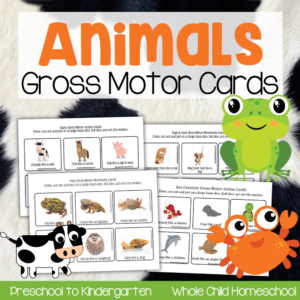
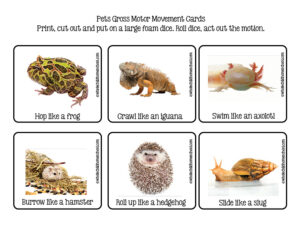
Grab a set of the Farm gross motor cards ( A freebie in the WCH Shop, also included in the Farm Animals Unit Study bundle) so your younger kids can move their bodies around like six different farm animals.
Create a sensory bin: Use the directions for this Farm Harvest bin and add in some farm animal toys. You could also add in a toy barn if you have one.
Play the “Fly the Chickens Home” balloon game for a good “heavy work” workout.
Play Guess Who? Animal Friends game or the Farmyard Heads & Tails Game to work on auditory and visual acuity.
Pretend Play: Use these farm animal puppets to pretend play the animals that live on the farm.
Get the Farm Animals Unit Study Bundle in the WCH Resource Store



Even More Ideas to Extend Your Farming and Farm Animals Unit Study

Charlotte’s Web literature unit study on our sister site, Homeschool Helper Online
Just for Fun
Free Horse Farm App on Android or Apple
Free My Horse Game
Flickin Chicken Indoor Outdoor Target Toss Game
ThinkFun Chicken War Game – A Strategic Board Game
Brick building Chicken Henhouse
Farm Animal X-ray set for light table
Chicken Finger Slingshots (these are ridiculously fun for all ages, even the adults!)
Return to the Pets and Vets Unit Study Series Page
Pin this to your favorite board so you can find it again! And be sure to follow Whole Child Homeschool on Pinterest for 1000s of Free Homeschooling Resources and Ideas!

